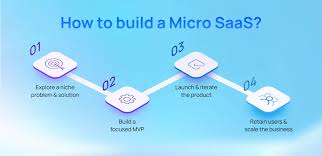
This guide is here to help. We’ll walk through a real example. We’ll break down how a micro-SaaS business grew.
You’ll see the steps involved. You’ll learn about common challenges. You’ll also find out how to overcome them.
Our goal is to make this process clear. We want to show you a path forward.
A micro-SaaS business can be a smart way to earn income by solving a specific problem with software. Success comes from understanding a niche market, building a simple but effective tool, and focusing on customer needs. It’s about creating value without needing a huge team or massive investment.
Understanding the Micro-SaaS Concept
So, what exactly is a micro-SaaS? Think of it as a small software service. It serves a very specific group of people.
It does one thing really well. It doesn’t try to be everything to everyone. These businesses often start with just one or two people.
They focus on solving a clear pain point. This pain point is usually for a small, defined market.
Imagine a busy shop owner. They struggle with sending out appointment reminders. A micro-SaaS could be a simple app that does just that.
It sends automated texts. It’s not a full-blown scheduling system. It just handles the reminders.
This is the essence of micro-SaaS. It’s focused and targeted.
Why is this approach popular? It’s less risky than big software projects. You can test ideas quickly.
You don’t need millions of dollars to start. Your customers are usually easier to find too. They are grouped by their shared problem.
This makes marketing much simpler.
The Case Study: “TaskFlow” – A Simple Project Tracker
Let’s look at a fictional but realistic example. We’ll call it “TaskFlow.” This tool helps small teams manage simple projects. Many small businesses, like design studios or freelance groups, needed this.
They didn’t need complex software like Asana or Trello. They just needed a clear way to see who was doing what.
TaskFlow started with a simple idea. The founder, Alex, worked with several small freelance clients. He saw them struggling.
They used emails and spreadsheets. It was messy. Tasks got lost.
Deadlines were missed. Alex thought, “There has to be an easier way.” He wasn’t a big tech guru. He just saw a need.
He decided to build a very basic tool. It would list projects. Each project would have tasks.
You could assign a task to a person. You could set a due date. That was it.
No fancy features. No complex integrations. Just the core needs.
From Idea to First Customer: The Early Days
Alex spent about three months building the first version. He used simple tools. He focused on making it easy to use.
He didn’t want to overwhelm his target users. He launched it quietly. He told his freelance friends.
He offered it for free at first. He wanted feedback.
This is where the human connection starts. Alex talked to every single user. He asked them what they liked.
He asked what they didn’t like. He listened carefully. One user said, “I wish I could see tasks by person.” Another said, “It would be great to get a daily summary email.” Alex took this feedback.
He made small updates.
He saw that people were using it. They found value. This gave him confidence.
He decided to start charging. He chose a simple monthly fee. It was only $10 a month.
This was affordable for small teams. The first paying customer was a big moment for him. It proved his idea had value.
TaskFlow’s Core Features (MVP)
Minimum Viable Product (MVP) is key for micro-SaaS.
- Project List: See all projects in one place.
- Task Management: Add, edit, and delete tasks.
- User Assignment: Assign tasks to team members.
- Due Dates: Set and view task deadlines.
This simple set met the basic needs of early users.
Gaining Traction: Marketing and Growth
Alex knew he couldn’t just build it and expect people to come. He needed to find more users. He thought about where his target customers hung out.
They were in online forums for freelancers. They joined Facebook groups for small businesses. They searched on Google for “simple project tool for small teams.”
He started writing helpful articles. He didn’t just talk about TaskFlow. He talked about project management tips for small teams.
He offered advice. At the end of his articles, he’d mention TaskFlow as a solution. This is called content marketing.
It builds trust.
He also used social media. He shared tips. He answered questions.
He engaged with potential customers. He didn’t spam groups. He tried to be genuinely helpful.
He was always looking for feedback. This built a small community around his product.
The word of mouth started. Happy users told other small businesses. They told them about how easy TaskFlow was.
They told them how it solved their problems. This is the best kind of marketing. It’s free and comes from trusted sources.
Marketing Channels for TaskFlow
Alex used a mix of methods.
- Content Marketing: Blog posts on project management.
- Social Media: Engaging in relevant groups and platforms.
- Community Building: Fostering a sense of belonging.
- Word of Mouth: Encouraging happy users to share.
He focused on being helpful first.
The Income Blueprint: Pricing and Revenue
Alex kept his pricing simple. He offered one plan. It was $10 per month per team.
This was easy to understand. It was also very affordable. For a small team of 3-5 people, this was about $2-3 per person.
It was a no-brainer for the value it provided.
He also offered an annual discount. This helped secure revenue for the year. It encouraged loyalty.
People who paid yearly were less likely to leave. This made his income more predictable. Predictable income is great for a small business owner.
As TaskFlow grew, he added a slightly higher tier. It was $25 per month. This tier had a few more features.
It might have included basic reporting. Or maybe team analytics. This allowed him to serve slightly larger teams.
It also increased his average revenue per user. This is a key metric for growth.
The income wasn’t massive at first. But it was steady. With 100 customers at $10/month, that’s $1000 a month.
That’s a great start. Many micro-SaaS businesses aim for this level. It can replace a full-time salary.
It offers freedom.
TaskFlow’s Pricing Strategy
Simplicity and value were key.
- Tier 1: $10/month (Core features for small teams)
- Tier 2: $25/month (Added features for growing teams)
- Annual Discount: Encouraged longer commitments.
This created a clear path for customers.
Handling Customer Support and Feedback
For a micro-SaaS, great customer support is vital. Alex handled most of it himself early on. He used email.
He responded quickly. He was always polite and helpful. When users had issues, he saw it as a chance to improve.
He listened to their frustrations.
He also created a simple help page. It had answers to common questions. This saved him time.
It also helped users solve problems themselves. It was a win-win.
Feedback wasn’t just about problems. It was also about ideas. Users would suggest new features.
Alex kept a list. He would review these ideas. He looked for patterns.
If many users asked for the same thing, he’d consider adding it. He always prioritized features that fit the core mission. He avoided adding things that made TaskFlow too complicated.
This commitment to customers built loyalty. People felt heard. They felt valued.
This is why they stayed customers. They trusted Alex and his product. This trust is earned over time.
Customer Support Best Practices
Building relationships through service.
- Prompt Responses: Answer emails quickly.
- Empathy: Understand the user’s problem.
- Clear Solutions: Offer easy-to-follow fixes.
- Self-Service Options: Create a FAQ page.
Good support keeps customers happy.
Scaling and Evolution: When to Add More
TaskFlow didn’t stay exactly the same. As the user base grew, Alex saw opportunities. He noticed that some teams were growing.
They needed more than basic task tracking. They started asking about simple reporting. They wanted to see how much work each person did.
They wanted to track project progress over time.
He introduced a new reporting feature. It showed tasks completed per user per week. This was a small addition but highly requested.
It didn’t change the core of TaskFlow. It just added a bit more insight. This allowed him to justify the $25/month plan.
He also improved the underlying technology. As more users joined, he needed to ensure speed and reliability. He upgraded his hosting.
He optimized the database. These are behind-the-scenes tasks. They are crucial for growth.
They ensure the service stays fast and stable.
Scaling also meant thinking about his own time. Alex couldn’t do everything forever. He started looking for ways to automate.
He used tools to help manage customer emails. He might have hired a part-time virtual assistant for basic support tasks later on. This freed him up to focus on product development and strategy.
Scaling TaskFlow
Steps taken as the business grew.
- Feature Expansion: Added requested features like basic reports.
- Technical Upgrades: Improved hosting and performance.
- Automation: Used tools to streamline tasks.
- Outsourcing: Considered hiring help for support.
Growth requires adaptation.
Common Pitfalls and How to Avoid Them
Starting a micro-SaaS is exciting. But it’s not always smooth sailing. Many founders run into problems.
Alex learned about some of these too. One big pitfall is trying to do too much. It’s tempting to add every feature requested.
But this can make your product messy. It loses its focus.
Another mistake is not talking to customers. If you build in a bubble, you might build something no one wants. Or you might build something that doesn’t solve their real problem.
Always be listening. Always be asking questions.
Pricing can also be tricky. Charging too little means you can’t grow. Charging too much means you won’t get customers.
Alex’s $10/month was a good starting point. He tested and adjusted. Don’t be afraid to change your pricing as you learn.
Finally, burnout is real. It’s easy to work all the time. Remember to take breaks.
Build a sustainable pace. Alex learned to set boundaries. He knew when to step away.
This kept him energized and focused.
Micro-SaaS Pitfalls to Watch For
Lessons learned from experience.
- Feature Creep: Adding too many features.
- Ignoring Customers: Building without feedback.
- Incorrect Pricing: Charging too much or too little.
- Burnout: Working constantly without breaks.
Be aware and prepared.
The Numbers: What Real Income Looks Like
Let’s be clear. Most micro-SaaS businesses don’t make millions overnight. TaskFlow was a success because it provided steady, predictable income.
After about two years, TaskFlow had 500 paying customers.
With an average of $15/month per customer (a mix of $10 and $25 plans), that’s $7,500 per month in revenue. After expenses (hosting, tools, etc.), this could be around $6,000-$7,000 in profit per month. This is a very good income for one person working part-time or even full-time on their own business.
It offers a great lifestyle.
The real win is not just the money. It’s the freedom. Alex could set his own hours.
He could work from anywhere. He was building something he owned. This kind of control is very valuable.
It’s a different kind of wealth.
TaskFlow’s Financial Snapshot (Year 2)
Illustrative figures for context.
- Customers: 500
- Average Price: $15/month
- Monthly Revenue: $7,500
- Estimated Monthly Profit: $6,000 – $7,000
Steady income and freedom are the goals.
Building Your Own Micro-SaaS: Key Takeaways
If you’re inspired by the TaskFlow story, here’s what you can take away. First, find a real problem. Talk to people.
See what frustrates them. Look for a niche where a simple software solution would be a huge help.
Second, start small. Build only the core features needed to solve that one problem. This is your Minimum Viable Product (MVP).
Get it out there. Get feedback. Iterate.
Don’t try to build everything at once.
Third, focus on your customers. Listen to them. Help them.
Make them feel valued. Great customer service builds loyalty. It’s your best marketing tool.
Fourth, price for value. Your software saves people time or money. Charge a fair price for that.
Make it simple to understand. Offer annual discounts.
Finally, be patient and persistent. Building a successful micro-SaaS takes time. There will be ups and downs.
Keep learning. Keep improving. The reward is worth the effort.
Real-World Scenarios for Micro-SaaS
Let’s think about where you might see micro-SaaS in action. Imagine a local bakery owner. They get lots of phone calls for custom cake orders.
A micro-SaaS could be a simple online form that collects all the details for a custom cake. It sends a summary to the baker. No complex inventory or POS system, just custom orders.
Consider a busy dentist’s office. They need to send out reminders for check-ups. Instead of a big patient management system, a micro-SaaS could just do that.
It pulls names and dates from a simple list and sends automated text reminders. This saves the receptionist time.
Think about a small e-commerce seller. They struggle with writing product descriptions. A micro-SaaS could offer a simple tool that helps generate basic descriptions based on keywords.
It’s not an AI writer, but it speeds up the process. It’s a focused solution for a common headache.
These examples show that micro-SaaS thrives on solving very specific, often repetitive, tasks for specific groups. The key is the narrow focus. It’s about being the best at one small thing.
What This Means for You: Is Micro-SaaS Right?
So, how do you know if this path is for you? Ask yourself these questions. Do you enjoy solving problems?
Are you patient enough to build something step-by-step? Are you willing to listen to others, even when it’s hard? Do you prefer working on focused projects rather than massive, complex ones?
If you answered yes to most of these, micro-SaaS could be a great fit. It’s not about being a coding genius. It’s about understanding people and their needs.
It’s about creating simple tools that make their lives better. You don’t need a big team. You can often start with your own skills.
It’s also important to know when it’s not right. If you want to build the next Facebook, this isn’t it. If you don’t like dealing with people or their problems, this isn’t for you.
It requires a direct connection to your users.
But for many, it offers a path to financial independence. It offers the chance to build something meaningful. It’s about creating value and being rewarded for it.
Quick Tips for Your Micro-SaaS Journey
Here are a few quick pointers to keep in mind as you start.
- Keep it Simple: Your first version should be incredibly basic.
- Validate Your Idea: Talk to potential customers before you build a lot.
- Focus on One Thing: Be the best at solving that single problem.
- Learn to Market: Even the best tool needs to be found.
- Be Responsive: Answer your customer’s emails and questions.
- Track Your Finances: Know your numbers, even if they are small at first.
Actionable Micro-SaaS Steps
Start here to build momentum.
- Identify a Problem: What annoys people in a niche?
- Define the Solution: What is the simplest software to fix it?
- Build an MVP: Create the absolute minimum needed.
- Find Users: Get it in front of your target audience.
- Listen and Improve: Gather feedback and make small changes.
Take it one step at a time.
Frequently Asked Questions about Micro-SaaS Income
What is the typical starting income for a micro-SaaS business?
Starting income varies greatly. Many micro-SaaS businesses aim for $500-$2,000 per month in the first year. TaskFlow reached $1,000/month within a few months.
The goal is steady growth, not instant riches. It often starts small and builds over time.
Do I need to be a programmer to start a micro-SaaS?
You don’t always need to be a programmer, but it helps a lot. You can use no-code tools to build simple apps. Or you can hire a developer for specific parts.
However, understanding the basics of how software works is very useful. It helps you communicate your vision.
How long does it take to see a profit with a micro-SaaS?
Profitability can take anywhere from a few months to a year or more. It depends on your product, marketing, and pricing. TaskFlow became profitable relatively quickly because its costs were low and its pricing was simple.
Focus on building value first.
What are the biggest challenges in running a micro-SaaS?
Common challenges include finding customers, keeping them, managing your time, and avoiding burnout. Technical issues can also arise. The key is to be adaptable and persistent.
Learning from mistakes is part of the process. Alex faced many of these.
Can I build a micro-SaaS alongside a full-time job?
Yes, many people start micro-SaaS businesses as side projects. It requires discipline and good time management. You’ll need to dedicate evenings and weekends.
TaskFlow started as a side project for Alex. It grew steadily before he focused on it full-time.
What kind of customers are best for a micro-SaaS?
The best customers are those in a niche with a clear, painful problem that your software solves. They are often small businesses, freelancers, or specific departments within larger companies. They are looking for simple, affordable solutions that save them time or money.
Conclusion
Building a micro-SaaS business like TaskFlow is achievable. It’s about finding a real need and creating a simple, effective solution. It requires dedication, listening to your customers, and a commitment to clarity.
The income generated can provide freedom and security. It’s a journey of learning and growth. Start small, focus on value, and enjoy the process.