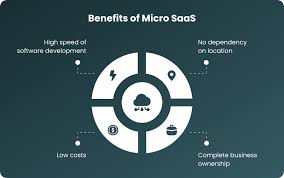
Starting a micro-SaaS business on the side can feel like a dream. You want something that works for you. But the path from idea to actual working business can seem really tricky.
Many people get stuck wondering where to even begin. They have a great idea, but turning it into a real thing is a challenge. This guide breaks down the whole process.
We’ll look at finding your perfect idea. We’ll talk about building your first version. And we’ll cover how to get it out there.
You’ll learn what works for other successful side projects.
A side project micro-SaaS business is a small software as a service that you build and run alongside your main job. The goal is to create a recurring income stream with minimal daily effort once it’s set up. It focuses on solving a very specific problem for a niche audience.
What Is a Micro-SaaS Business?
A micro-SaaS is a small software company. It offers a specific tool. This tool solves one particular problem.
It’s usually for a small group of people. Think of it like a very focused app. It does one thing really well.
Small teams or even one person can run it. The “SaaS” part means “Software as a Service.” You rent the software. You don’t buy it outright.
Customers pay a small fee each month or year. This is called recurring revenue. It’s great for predictable income.
Micro-SaaS businesses are different from big software companies. They don’t try to do everything. They aim for a niche.
This means a small, specific market. This makes them easier to manage. It also makes them less risky.
You don’t need huge teams or massive funding. Many are started as side projects. This means they are built in spare time.
They grow slowly at first. The focus is on steady progress. It’s about solving a real problem that people will pay for.
It’s a way to build something valuable without quitting your day job.
Why Start a Micro-SaaS as a Side Project?
Starting a micro-SaaS while you have another job has big pluses. Your main job gives you a safety net. You still have money coming in.
This means you can take more risks. You can build your business without too much pressure. It also lets you learn as you go.
You can test ideas. You can see what works. You don’t need to quit everything.
This reduces stress greatly. Many successful SaaS companies started this way. They were built in evenings and weekends.
It’s also a great way to gain new skills. You’ll learn about coding. You’ll learn about marketing.
You’ll learn about customer service. You’ll become a better problem-solver. This can even help your main job.
Plus, the idea of building something yourself is very rewarding. Seeing people use your tool makes it all worthwhile. It’s about building freedom.
It’s about creating an asset that can grow over time. It’s a smart way to build a business.
Finding Your Niche Idea
The first step is finding a good idea. Don’t just guess. Look for real problems.
What frustrates people? What tasks are repetitive and boring? What could be made much easier with software?
Think about your own work. Are there tools you wish existed? Talk to people in different jobs.
Ask them what their pain points are. Small businesses often have many needs. They might not have big budgets.
Micro-SaaS is perfect for them.
Look at online forums and communities. Reddit is a great place for this. Search for topics related to your interests.
See what questions people are asking. What problems are they complaining about? These are potential business ideas.
You want an idea that is specific. It should solve one problem well. It should not be too broad.
A broad idea is hard to build and market. A specific idea targets a clear audience. This makes your job much easier.
Consider your own skills. What are you good at? What do you enjoy doing?
Building a business is hard work. You’ll need to stay motivated. If you’re passionate about the problem, you’ll stick with it.
Look for ideas where you can build a Minimum Viable Product (MVP). This is the simplest version of your idea. It should have just enough features to solve the core problem.
You can add more later. This gets your product to users faster.
Idea Validation Checklist
Does it solve a real problem?
Are people actively looking for a solution?
Is the target market specific enough?
Can you reach this market easily?
Are people willing to pay for a solution?
Can you build a simple version (MVP) fairly quickly?
Do you have some interest or knowledge in this area?
Will it generate recurring revenue?
For example, I remember talking to a friend who runs a small online store. He was spending hours each week manually creating shipping labels. He had to copy-paste addresses.
He was losing time and making mistakes. I saw that as a clear problem. A micro-SaaS could automate this.
It would save him time and money. This was a much better starting point than trying to build a whole e-commerce platform.
Building Your Minimum Viable Product (MVP)
Once you have an idea, it’s time to build. Don’t try to build the perfect product from day one. That takes too long.
You need an MVP. This is the basic version. It has just enough features to be useful.
It solves the main problem. For the shipping label idea, the MVP would be a tool that connects to common shipping carriers. It takes order data.
It prints labels. That’s it. No fancy analytics.
No customer accounts yet.
The goal of an MVP is to get feedback. You want real users. You want to see how they use it.
What do they like? What do they hate? What’s missing?
This feedback is gold. It tells you what to build next. It prevents you from wasting time on features nobody wants.
This is a key lesson I learned early on. I once spent months building a feature that users never touched. It was a waste of my evenings.
For your MVP, focus on simplicity. Use existing tools and services where possible. Don’t reinvent the wheel.
If you need payments, use Stripe or PayPal. If you need user accounts, use a service that handles that. This lets you move faster.
You can use no-code or low-code tools if coding isn’t your strength. Tools like Bubble, Softr, or Zapier can help build functional products without deep coding knowledge. These are great for testing ideas quickly.
MVP Development Quick Tips
Focus on the core problem.
Only build features that directly solve it.
Keep it simple.
Use standard tools and integrations.
Get it out fast.
Speed is more important than perfection.
Plan for feedback.
Make it easy for users to tell you what they think.
The technology stack doesn’t matter as much as getting it working. For my friend’s shipping label idea, we considered a few approaches. We could build a web app from scratch.
Or we could use tools to connect existing services. We chose the latter. It was faster.
We used Zapier to pull orders from the store. We used a label printing API. It worked well.
This allowed us to test the core idea with actual users within weeks.
Choosing the Right Technology Stack
When building your micro-SaaS, the tech stack matters. But don’t get lost in the details. The best stack is one you know well.
Or one you can learn quickly. For many micro-SaaS projects, simplicity is key. You want to build fast.
You want to maintain it easily. This means avoiding overly complex frameworks or tools if you’re new to them. Your goal is to solve the problem, not to show off your coding skills.
For front-end, simple HTML, CSS, and JavaScript are often enough. You can use frameworks like React, Vue, or Svelte if you are comfortable. But for an MVP, plain JavaScript might be fine.
For the back-end, languages like Python (with Flask or Django), Node.js (with Express), or Ruby (with Rails) are popular. Choose what you know or what has good community support. Databases like PostgreSQL or MySQL are reliable.
SQLite can be good for very simple apps.
Consider managed services. Cloud platforms like Heroku, Vercel, or Netlify offer easy deployment. They handle servers for you.
This is huge for a side project. You don’t want to be a sysadmin. You want to focus on your product.
Managed databases are also available. They reduce your operational burden. Think about scalability, but don’t over-engineer.
You can always scale up later. Start with what’s easy to set up and run.
Tech Stack Considerations for Micro-SaaS
Familiarity: Use what you know best.
Speed: Choose tools that allow quick development.
Cost: Start with free tiers or low-cost options.
Maintenance: Pick technologies that are easy to update.
Scalability: Plan for growth but don’t over-build initially.
For the shipping label tool, we used a mix. The front-end was basic HTML and a little JavaScript. The back-end was a simple Python script.
It ran on a small cloud server. We used the Stripe API for payments. This setup was fast to build.
It was also cheap to run. It handled the core task perfectly. We avoided complex databases.
We just needed to store basic user and transaction data.
Pricing Your Micro-SaaS
Pricing is a tricky part for many founders. You want to make money. But you don’t want to scare customers away.
For a micro-SaaS, pricing usually involves recurring fees. Think about value. What is the problem you’re solving worth to your customer?
How much time or money does it save them? This is a good starting point.
Often, a tiered pricing model works well. You can offer different levels of service. For example, a basic plan might have limited features or usage.
A premium plan could offer more. This allows different types of customers to find a plan that fits. It also gives them a reason to upgrade as their needs grow.
Keep the tiers simple. Avoid too many options.
A common approach is to offer a monthly and an annual subscription. Annual plans often come with a discount. This encourages longer commitment.
It also gives you cash upfront. For a micro-SaaS, you might start with one or two simple plans. You can add more later based on feedback.
Your price should reflect the value you deliver. It should also be competitive for your niche.
Pricing Strategies for Micro-SaaS
Value-Based Pricing: Price based on the value you deliver.
Tiered Pricing: Offer different plans for different needs.
Freemium: Offer a free basic version, with paid upgrades (use with caution).
Per-User Pricing: Charge based on the number of users.
Usage-Based Pricing: Charge based on how much the service is used.
For the shipping label tool, we decided on two plans. A free plan allowed up to 10 labels per month. This was for people to try it out.
The paid plan offered unlimited labels for a low monthly fee. We also offered a small discount for annual payment. This was simple.
It clearly showed the value of the paid plan. Users could see how much time they would save. This made the decision to pay easy for them.
Marketing Your Micro-SaaS
This is where many side projects stumble. You’ve built a great tool. But how do people find it?
Marketing a micro-SaaS is different from big companies. You can’t spend millions on ads. You need smart, focused strategies.
Content marketing is very effective. Write blog posts. Share helpful tips related to your niche.
This attracts people who have the problem you solve.
Social media can work if you’re in the right places. Engage with communities where your target users hang out. Answer questions.
Be helpful. Don’t just push your product. Build trust.
Building in public can also be powerful. Share your journey. Show your progress.
This attracts followers. Some of them might become users.
Search Engine Optimization (SEO) is crucial for long-term growth. Make sure your website is easy for search engines to find. Use relevant keywords.
Create good content. Paid ads can work, but start small. Target very specific keywords.
Monitor your ad spend closely. Ensure you’re getting more value than you’re spending. Email marketing is also vital.
Collect emails from visitors. Nurture them with useful content. Then, introduce your product.
Effective Micro-SaaS Marketing Channels
Content Marketing: Blog posts, guides, tutorials.
SEO: Optimize your website for search engines.
Social Media: Engage in niche communities.
Email Marketing: Build a list and nurture leads.
Online Communities: Participate in forums and groups.
Partnerships: Collaborate with complementary businesses.
For the shipping label tool, we focused on SEO and online communities. We wrote blog posts about efficient shipping for small businesses. We shared tips on how to save money on shipping.
We also joined online forums for e-commerce sellers. We answered questions about shipping. When it was relevant, we would mention our tool.
We made sure to only do this when it was genuinely helpful.
Customer Support and Feedback
Even for a micro-SaaS, good customer support is key. You don’t need a big support team. But you need to be responsive.
When users have questions or issues, they need answers. Quick, helpful replies build trust. They also help you retain customers.
Happy customers are loyal customers. They might even tell others about your product.
Collecting feedback is as important as providing support. Ask users what they think. Use surveys.
Have a feedback form on your site. Listen to what they say. This feedback drives your product roadmap.
It helps you improve. It shows users you care about their experience. This is how you build a loyal following.
It’s a continuous cycle of improvement.
I always set up a simple way for users to contact me. For the shipping label tool, it was just an email address. I checked it daily.
I tried to respond within a few hours. If someone had a problem, I made sure to fix it. Sometimes, a small bug fix or a quick explanation was all they needed.
Other times, their feedback led to new feature ideas. This personal touch is what makes a micro-SaaS special.
Customer Feedback Loop
Listen Actively: Pay attention to what users say.
Easy Feedback Channels: Make it simple to contact you.
Respond Promptly: Acknowledge and address issues quickly.
Ask for Input: Use surveys and direct questions.
Prioritize Improvements: Use feedback to guide development.
Close the Loop: Let users know when their feedback leads to changes.
One time, a user pointed out a small issue with how our label tool handled international addresses. It wasn’t something I had thought about. It was a common country code missing.
I fixed it that day. The user was thrilled. They became a vocal supporter.
This showed me the power of listening. Even small problems can impact users. Solving them builds strong relationships.
Scaling Your Micro-SaaS
As your micro-SaaS grows, you might think about scaling. This doesn’t always mean becoming huge. It means managing more users and more revenue.
First, ensure your technology can handle the load. If your app is getting slow, you might need to upgrade your hosting. Optimize your code.
Add caching. These steps can make a big difference.
Scaling also means improving your processes. Can you automate more tasks? Can you delegate any work?
As a side project, your time is limited. Look for ways to free up your time. This might involve hiring a virtual assistant for support.
Or using more advanced automation tools. The goal is to keep the “side” aspect of your project. You don’t want it to take over your life.
Another way to scale is by adding new features. But only do this if they align with your core mission. Don’t add features just because you can.
They should serve your niche. They should solve new problems or solve existing ones better. Expanding to new, related niches is also a form of scaling.
This means finding new groups of people with similar problems. You can then adapt your tool for them.
Scaling Strategies for Micro-SaaS
Optimize Infrastructure: Ensure your tech can handle more users.
Automate Processes: Use tools to save time on repetitive tasks.
Delegate: Consider hiring help for support or other tasks.
Add Value, Not Bloat: Introduce new features carefully.
Expand Niche: Target similar customer groups with adapted solutions.
Refine Marketing: Scale effective marketing channels.
For the shipping label tool, scaling meant improving the integrations. We started with one e-commerce platform. As we grew, we added support for others like Shopify, Etsy, and WooCommerce.
This expanded our reach. It also meant more complex code. We had to manage different data formats.
We also looked at ways to handle higher volumes of label printing. This involved optimizing the printing process itself.
When to Move From Side Project to Full-Time
This is the big question for many. When is your micro-SaaS ready for you to go all-in? There’s no single answer.
It depends on your financial situation. It depends on your risk tolerance. A good sign is when your SaaS income is stable.
It should be enough to cover your living expenses. Or at least a significant portion of them. It should also be growing consistently.
Consider the time commitment. Is your side project taking up all your free time? Are you burning out?
If the business is demanding too much, it might be time to consider a change. Also, think about your passion. Are you still excited about the project?
Or does it feel like a chore? Your passion will fuel you through tough times.
Talk to people who have made the leap. Learn from their experiences. Some suggest having 6-12 months of living expenses saved.
This provides a buffer. It reduces financial stress. It allows you to focus on growing the business.
Don’t rush the decision. Make sure your business is truly ready. And make sure you are ready for the change.
Signs Your SaaS Might Be Ready for Full-Time
Stable & Growing Revenue: Income covers a significant portion of your needs.
Predictable Cash Flow: Recurring revenue is reliable.
Manageable Workload: The business doesn’t consume all your time and energy.
Clear Growth Potential: You see opportunities for further expansion.
Personal Readiness: You are mentally prepared for the transition and potential risks.
Financial Cushion: You have savings to support yourself during the transition.
For the shipping label tool, it took about three years. The revenue grew steadily. It started to match my part-time salary.
I had saved up some money. I felt confident I could manage the business full-time. The demand for new features was also growing.
I knew I needed more time to dedicate to it. It was a tough decision, but also very exciting.
Common Pitfalls to Avoid
Building a micro-SaaS is rewarding, but it’s not without its challenges. One of the biggest mistakes people make is trying to build too much too soon. They get caught up in feature creep.
They want to add every possible function. This delays launch. It wastes resources.
Focus on the core problem first. Get that right.
Another pitfall is not talking to customers. You might think you know what they want. But you won’t truly know until you ask.
Customers are your best source of information. Listen to them. Their feedback is more valuable than any market research report.
Building in isolation is a sure way to fail.
Ignoring marketing is also a common mistake. You can have the best product in the world. If no one knows about it, it won’t sell.
Dedicate time to marketing from the start. Even if it’s just a few hours a week. Consistency is key.
Finally, don’t be afraid to iterate. Your first idea might not be the final product. Be willing to change.
Be willing to pivot based on what you learn.
Micro-SaaS Pitfalls to Watch Out For
Feature Creep: Building too many features too early.
Ignoring Customers: Not listening to user feedback.
No Marketing Plan: Building a great product that nobody knows about.
Perfectionism: Waiting too long to launch due to wanting it to be “perfect”.
Underpricing: Not charging enough for the value provided.
Technical Debt: Rushing the build leads to future maintenance problems.
I saw a friend struggle with perfectionism. He kept delaying the launch of his app. He was always tweaking one more thing.
By the time he launched, a competitor had already captured the market. He was disheartened. It taught me that “done” is better than “perfect”.
Getting your product into users’ hands and iterating is far more effective.
The Future of Micro-SaaS
The micro-SaaS landscape is constantly evolving. With more tools and platforms available, it’s easier than ever to start. Low-code and no-code solutions are leveling the playing field.
This means more people can build software without deep technical skills. This trend will likely continue. It opens up opportunities for diverse ideas.
The focus will remain on solving specific problems. Niches will become more defined. As the market gets more crowded, differentiation will be key.
This means excellent customer service. It means a deep understanding of your target audience. It means continuous innovation within your chosen niche.
Automation and AI will play bigger roles. They will help micro-SaaS businesses operate more efficiently.
The appeal of building a side business for financial freedom and personal fulfillment will only grow. People are looking for ways to supplement their income. They want control over their work.
Micro-SaaS offers a flexible, scalable path to achieve these goals. It’s an exciting time to be building in this space. The journey requires patience and persistence, but the rewards can be significant.
Frequently Asked Questions About Micro-SaaS
What is the difference between a SaaS and a micro-SaaS?
A full SaaS (Software as a Service) company is usually larger. It has a broad range of features and targets a wider market. Micro-SaaS focuses on a very specific problem for a niche audience.
It’s often run by a small team or even one person.
How much money can you make with a micro-SaaS?
Income varies greatly. Some micro-SaaS businesses generate a few hundred dollars a month. Others can bring in thousands or even tens of thousands monthly.
It depends on the problem solved, the pricing, and the market size.
Do I need to be a programmer to start a micro-SaaS?
Not necessarily. While coding skills are helpful, many micro-SaaS businesses are built using no-code or low-code tools. You can also partner with a developer.
The most important thing is to understand the problem and the customer.
Is it better to build my own software or use existing tools?
For a micro-SaaS, it’s often better to use existing tools and APIs where possible. This speeds up development significantly. Focus your unique effort on the core problem your software solves, not on building basic infrastructure.
How long does it take to build a micro-SaaS MVP?
An MVP can often be built in a few weeks to a few months. This depends on the complexity of the problem and your familiarity with the tools you’re using. The goal is to launch quickly to get feedback.
What are the biggest challenges in running a micro-SaaS?
Common challenges include finding the right niche, marketing effectively, managing time as a side project, handling customer support, and dealing with competition. Consistent effort and learning from feedback are key to overcoming these.
Conclusion
Building a micro-SaaS business as a side project is a fantastic journey. It offers the chance to create something valuable. It can provide extra income.
It’s a path to greater independence. Remember to focus on solving real problems. Keep your MVP simple.
Listen to your users. And most importantly, be patient and persistent. Your side project can grow into something amazing.